Google I/O 2026 Just Changed Local SEO Forever — Here's What It Means for Your Business
On May 19, 2026, Google announced the biggest transformation to Search in over 25 years. AI agents that call businesses on your behalf. A search box that builds custom apps instead of showing links. Background agents that monitor the web 24/7 and make decisions for users — without ever visiting your website.
If your business depends on people finding you through Google, everything just changed. Not gradually. Not someday. This summer. This is the breakdown of what Google announced, what it means for local businesses, and exactly what you need to do about it — starting now.
TL;DR
Google I/O 2026 introduced AI search agents, agentic booking, and an AI-powered search box that replaces the traditional keyword experience. AI Mode now has over 1 billion monthly users, and Google can call local businesses on behalf of searchers for pricing and availability. For local businesses, this means your Google Business Profile, structured data, reviews, and website content are no longer just ranking factors — they're the raw material AI agents use to decide whether to recommend you or your competitor. The businesses that prepare now will dominate. The ones that wait will disappear from the results that matter most.
What Did Google Actually Announce at I/O 2026?
Google I/O 2026 wasn't just incremental updates. It was a fundamental repositioning of Search from a tool you use to find information into an AI system that acts on your behalf. Here are the five announcements that matter most for local businesses.
1. The Search Box Got Its Biggest Upgrade in 25 Years
Google completely redesigned the search box with AI at the core. It now accepts text, images, files, videos, and even Chrome tabs as input. Instead of autocomplete suggestions, it offers AI-powered suggestions that anticipate what you actually need. The search box dynamically expands to let users describe complex, multi-condition requests — not just type keywords.
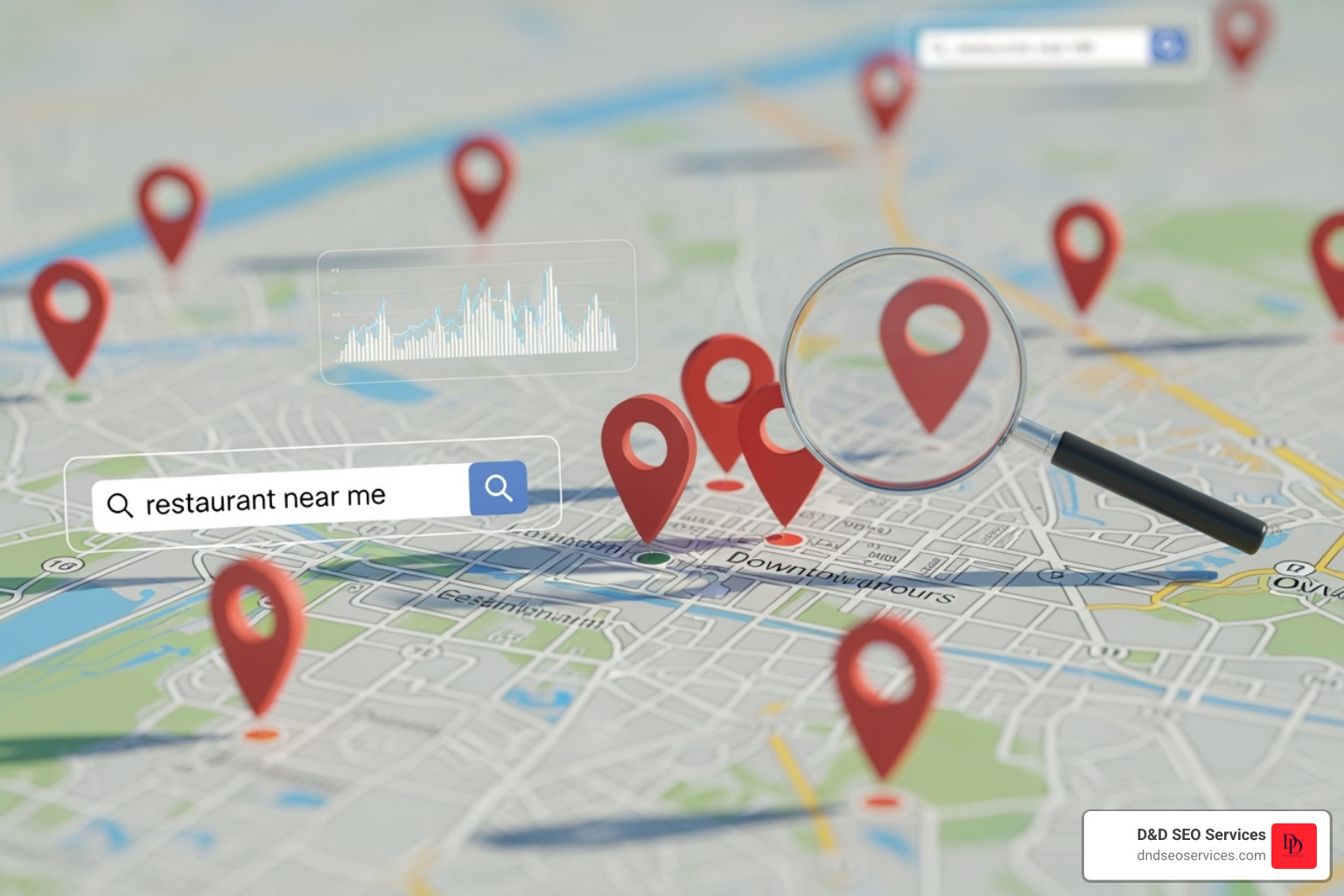
What this means: People aren't searching "plumber Fort Myers" anymore. They're searching "I need a licensed plumber who can fix a tankless water heater this weekend and has good reviews." Your website and Google Business Profile need to answer that level of specificity.
2. AI Mode Crossed 1 Billion Monthly Users
Google's conversational AI search experience — AI Mode — has been doubling in queries every quarter since it launched. It now has over 1 billion monthly users worldwide. AI Mode is powered by Gemini 3.5 Flash, and it doesn't show a list of blue links. It synthesizes information from across the web and gives users a direct, conversational answer.
What this means: More than a billion people are now using a version of Google Search that may never show your website as a traditional link. If your business isn't being cited in AI-generated responses, you're invisible to a growing majority of searchers.
3. Search Agents Now Run in the Background 24/7
Google introduced "information agents" — AI agents that users can set up to continuously monitor the web for specific criteria. Looking for a rental under $2,000 in a specific neighborhood? Set an agent. Want to know the instant a contractor gets bad reviews? Set an agent. These agents scan blogs, news sites, social posts, and Google's real-time data, then send synthesized updates.
What this means: Your business is now being evaluated by AI systems that run around the clock — not just when someone types a query. Your online presence needs to be consistently accurate, updated, and structured for machines to read, not just humans to browse.
4. Google Can Now Call Your Business on Behalf of Customers
This is the announcement that should stop every service business owner in their tracks. For categories like home repair, beauty, and pet care, Google's AI can now call local businesses directly to ask about pricing, availability, and services — then report back to the user. The user never picks up the phone. The user never visits your website. An AI agent makes the call, collects the information, and presents it alongside your competitors.
What this means: If your front desk can't clearly communicate your services, pricing, and availability, you'll lose to the business down the street whose team can. And if your GBP already lists accurate services, hours, and pricing, Google's agent may not even need to call — it already has what it needs.
5. Search Can Now Build Custom Apps and Dashboards on the Fly
Using a system called Antigravity, Google Search can now generate interactive tools, trackers, and mini-apps directly inside search results. A user planning a home renovation can get a custom dashboard that pulls live contractor reviews, local pricing data, and weather conditions — all without visiting a single website.
What this means: Static brochure websites are officially obsolete for discovery. Google is building the destination experience that used to live on your website. Your business data needs to be clean, structured, and available for these AI-generated experiences to pull from.
Monthly users now see AI Overviews in Google Search. Combined with 1 billion+ AI Mode users, the majority of Google searches now involve AI-generated answers — not just a list of links.
Why Does This Change Everything for Local Businesses?
Because Google is no longer sending people to your website to make decisions. Google is making the decision for them — or at least heavily influencing it — before a human ever clicks, calls, or visits. The shift is from "search and click" to "ask and act."
The Old Model Is Dying
For 20 years, local SEO worked like this: someone types keywords, Google shows a list of results, the person clicks through to websites, compares options, and contacts the business they like best. Every step of that process is being compressed or eliminated by AI.
Now: someone describes what they need in natural language. Google's AI synthesizes information from your GBP, website, reviews, and structured data. It either gives the user a direct answer, calls your business, or builds a custom comparison — all without the user ever seeing a traditional search result.
Rankings Still Matter — But They're Not Enough
Ranking #1 for "HVAC repair Fort Myers" still matters. But if Google's AI agent is synthesizing your competitor's reviews, pricing, and availability into a direct answer while your business data is incomplete or outdated, the #1 ranking won't save you.
The businesses that win in this new environment are the ones whose data is so clean, so complete, and so well-structured that AI systems can confidently recommend them. That's a different skill set than traditional SEO — and it's what we call Agent-Ready SEO.
AI Agents Are the New "First Impression"
When a Google agent calls your business, that call is your first impression with a potential customer — except the customer isn't on the line. A machine is. If your receptionist is confused, gives vague answers, or puts the agent on hold, that information goes back to the user alongside cleaner data from your competitor. Your phone system, intake process, and staff training are now local SEO factors.
What Is Agent-Ready SEO?
Agent-Ready SEO is the practice of optimizing your entire online presence — not just your website — so that AI agents can accurately understand, evaluate, and recommend your business. It builds on traditional local SEO but adds layers that most businesses haven't considered yet.
Complete, Accurate Business Data Everywhere
AI agents pull data from your Google Business Profile, website, review platforms, social media, directories, and structured data markup. If your hours are wrong on Yelp, your services are incomplete on GBP, and your website doesn't list pricing — the agent can't recommend you with confidence. NAP consistency and structured data aren't just ranking signals anymore. They're the raw material agents use to build their answers.
Structured Content That Machines Can Parse
AI agents don't "read" your website the way humans do. They parse structured data — schema markup, FAQ sections, service descriptions with clear attributes, pricing tables, and well-organized content hierarchies. A beautiful website with vague marketing copy is invisible to an agent. A well-structured page with schema markup, clear service definitions, and specific geographic context is exactly what agents need.
Review Signals That Build Trust at Scale
When an AI agent evaluates your business against competitors, reviews are one of the strongest signals it uses. Not just your star rating — the content of your reviews. Specific mentions of services, response time, pricing fairness, and staff professionalism all feed into the agent's assessment. A proactive review strategy isn't optional in the agent era.
AI Visibility Across Multiple Platforms
Google isn't the only AI making recommendations. ChatGPT, Perplexity, and other LLMs are also answering local business queries. AI-powered search optimization — including GEO (Generative Engine Optimization) and AEO (Answer Engine Optimization) — ensures your business shows up wherever AI is answering questions, not just in Google's ecosystem.
| SEO Element | Traditional SEO Role | Agent-Ready SEO Role |
|---|---|---|
| Google Business Profile | Map Pack ranking signal | Primary data source for AI agent recommendations |
| Schema Markup | Rich snippet eligibility | Machine-readable business attributes agents parse directly |
| Reviews | Social proof + ranking factor | Trust signal AI agents weigh when comparing businesses |
| Website Content | Keyword targeting + authority | Citation source for AI Overviews and LLM responses |
| NAP Citations | Local authority signal | Cross-reference data agents use to verify business accuracy |
| Phone/Intake System | Not an SEO factor | Direct touchpoint for AI agent calls — affects recommendation |
| Pricing Transparency | Conversion optimization | Data point agents surface in comparisons and agentic booking |
What Should Local Businesses Do Right Now?
You don't need to overhaul everything overnight. But you do need to start preparing — because these features are rolling out this summer, not next year. Here's the priority order.
1. Audit and Complete Your Google Business Profile
This is job #1 because it's the data source Google's agents will pull from first. Every service you offer needs to be listed. Hours need to be accurate, including special hours. Your business description should include specific services, service areas, and differentiators — not generic marketing copy. Add products/services with descriptions and links. Upload recent photos. Post weekly.
→ Learn more: How to Optimize Your Google Business Profile in 2026
2. Add Schema Markup to Every Key Page
At minimum, your website needs LocalBusiness schema, Service schema for each service page, FAQ schema on content pages, and Review/AggregateRating schema. This structured data is what makes your business machine-readable. Without it, AI agents have to guess — and they'll choose the competitor whose data they can parse with confidence.
3. Publish Specific, Answer-First Content
AI systems extract answers from content that directly answers specific questions. Every service page needs to answer: What is this service? Who needs it? What does it cost? How long does it take? What areas do you serve? What makes your approach different? Blog posts should target the exact questions your prospects ask — written in a way that AI platforms can extract and cite.
4. Build a Systematic Review Strategy
You need a process for generating reviews that mention specific services, outcomes, and experiences — not just generic "great service" reviews. Train your team to ask for reviews at the moment of highest satisfaction. Respond to every review with expertise-driven responses that showcase what you do. Volume matters, but detail matters more in the agent era.
5. Prepare Your Phone System for AI Calls
This one catches most businesses off guard. If Google's AI agent calls your business asking about pricing for a specific service, your team needs to give a clear, direct answer. Train front desk staff to handle these calls the same way they'd handle a high-value prospect — because that's exactly what it is. Businesses with IVR systems that route AI callers to dead ends will lose those leads to competitors who answer directly.
6. Invest in AI Visibility Beyond Google
Google's ecosystem is the biggest, but it's not the only one. ChatGPT, Perplexity, Gemini, and other AI platforms are answering local business queries every day. A comprehensive AI search optimization strategy ensures your business is cited and recommended across all of them — not just Google.
Google is rolling out agentic booking, AI-powered business calls, and information agents to all U.S. users this summer. The window to prepare is weeks, not months.
What Happens to Businesses That Don't Adapt?
The honest answer: the same thing that happened to businesses that ignored mobile optimization in 2015, or businesses that never claimed their Google Business Profile in 2018. They didn't disappear overnight. They just slowly stopped getting found — and by the time they noticed, their competitors had a lead that was almost impossible to close.
Invisible to the Fastest-Growing Search Channel
AI Mode is growing faster than any Google product in history — queries doubling every quarter. If your business isn't optimized for AI-generated answers, you're invisible to the channel that's growing while traditional clicks are flat or declining. And unlike traditional SEO, where you could rank by default in a low-competition market, AI systems actively choose which businesses to recommend. No optimization means no recommendation.
Losing Leads You Never Knew Existed
When a user asks Google to find them a plumber and Google's agent calls three businesses in your area, you won't know you were in the running unless you track it. If your competitor answered the agent's call clearly and you didn't, you lost a lead you never knew about. The attribution problem in AI search is real — and the only defense is being agent-ready before the calls start.
Competing Against AI-Generated Experiences
Google's Antigravity system can now build custom comparison tools, trackers, and dashboards directly in search results. Your website isn't just competing against other websites anymore — it's competing against AI-generated experiences that pull from your competitor's data in real time. The only way to win is to make sure your data is the data those experiences are built from.
How Does Search Behavior Change After I/O 2026?
The shift isn't theoretical. Here's how the same customer journey looks before and after these changes roll out.
| Customer Action | Before I/O 2026 | After I/O 2026 |
|---|---|---|
| Finding a local business | Search keywords → scan results → click websites → compare | Describe need in natural language → AI synthesizes answer with recommendations |
| Checking pricing | Visit 3-5 websites, call businesses manually | AI agent calls businesses, compiles pricing, presents comparison |
| Monitoring options | Repeat searches manually over days/weeks | Set an information agent that monitors 24/7 and sends updates |
| Booking appointments | Find phone number → call → schedule | Describe needs → AI handles booking with direct provider links |
| Comparing businesses | Open multiple tabs, read reviews on each | AI builds custom comparison dashboard with live data |
| Evaluating trust | Read individual reviews on Google, Yelp | AI synthesizes review themes and surfaces key details |
Notice the pattern: in every scenario, the user does less work and the AI does more. The businesses whose data, content, and online presence feed the AI's decision-making process will win. The businesses that exist only as brochure websites with a phone number will be bypassed.
Frequently Asked Questions
Is traditional SEO dead after Google I/O 2026?
No. Traditional organic rankings still drive traffic, and Google confirmed that queries hit an all-time high last quarter. What's changed is that rankings alone aren't enough. Your business also needs to be optimized for AI Overviews, AI Mode, and agentic search — which means structured data, complete GBP, and content that AI can parse and cite. Think of it as SEO + AI readiness, not one replacing the other.
When will Google's AI agents start calling businesses?
Google announced that agentic booking features — including AI-initiated calls to businesses for categories like home repair, beauty, and pet care — will roll out to all U.S. users this summer (2026). Google has been testing similar calling features (like "Ask for Me") since early 2025, so the infrastructure is already in place.
How do I know if my business is being recommended by AI?
Currently, there's no single dashboard that tracks all AI recommendations. You can check Google Search Console for AI Overview impressions, monitor your GBP insights for discovery searches, and use tools that track AI visibility across ChatGPT, Gemini, and Perplexity. A comprehensive AI visibility audit can establish your baseline.
What is Generative UI and should I worry about it?
Generative UI is Google's ability to build custom interactive tools — charts, comparisons, trackers, mini-apps — directly inside search results, without sending users to a website. For local businesses, the main concern is making sure your business data is clean and structured enough to be included in these AI-generated experiences. If your data is incomplete or inconsistent, your competitors will be featured instead.
Does this affect businesses outside of the U.S.?
Many features are launching in the U.S. first, but AI Mode is already available globally, and the redesigned search box is rolling out in all countries and languages where AI Mode exists. The direction is clear: these capabilities will expand worldwide. International businesses should prepare now.
What's the difference between AI Overviews and AI Mode?
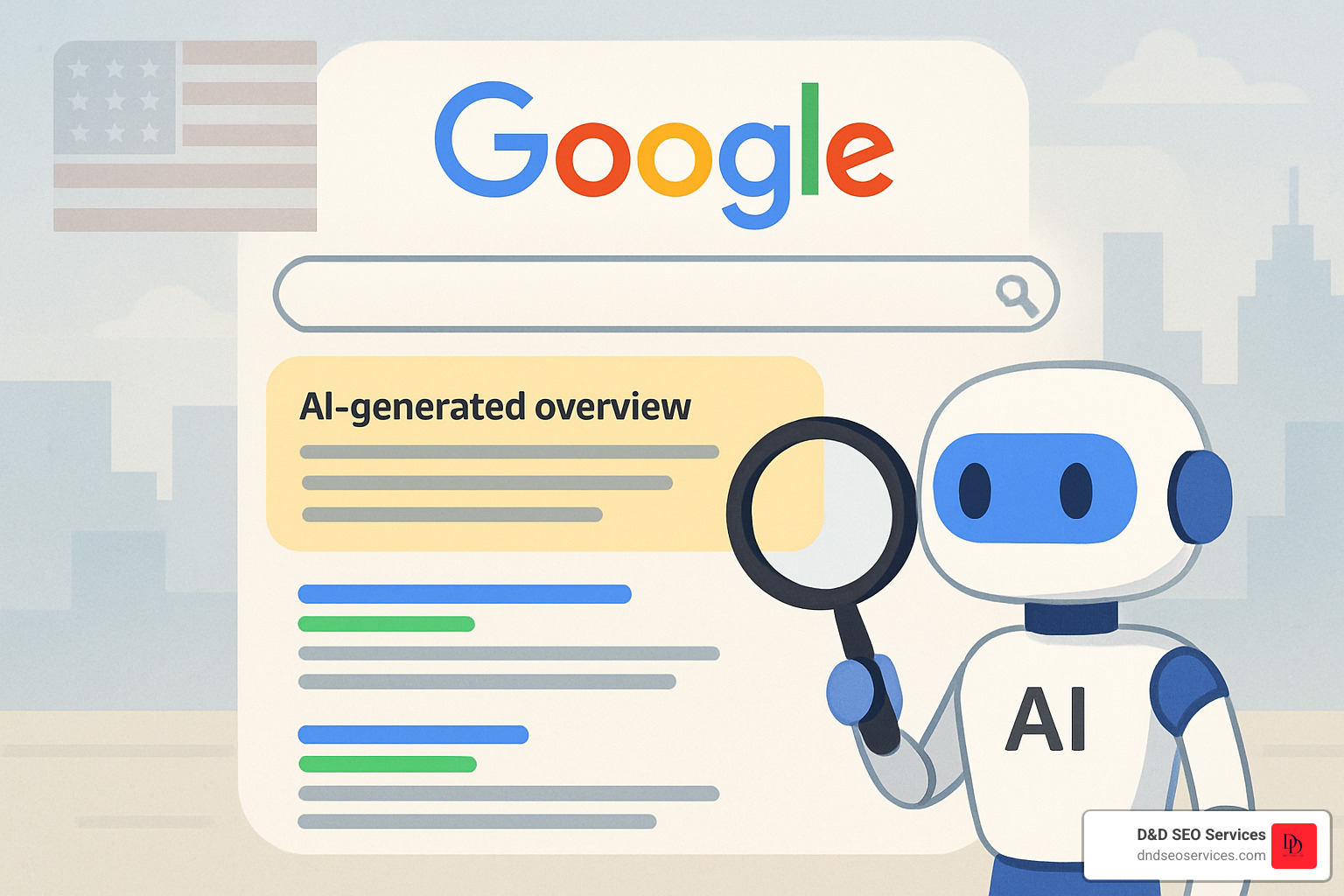
AI Overviews are the AI-generated summaries that appear at the top of regular search results — you see them automatically. AI Mode is a separate, opt-in conversational search experience where users can ask follow-up questions, create agents, and get deeper AI assistance. AI Overviews reach 2.5 billion monthly users; AI Mode has crossed 1 billion. Both pull from your business data and content.
How much does it cost to become "agent-ready"?
The foundational work — completing your GBP, adding schema markup, publishing answer-first content, and building a review strategy — overlaps heavily with strong local SEO. If you're already investing in local SEO, you're partway there. The incremental investment is in AI visibility auditing, structured data expansion, and content optimized specifically for AI extraction. A free audit can show you exactly where you stand.
What is "Personal Intelligence" in Google Search?
Personal Intelligence lets AI Mode connect to a user's Gmail, Google Photos, and (soon) Google Calendar to give personalized answers. For local businesses, this means search results will increasingly reflect individual context — a user's location, past interactions, and personal preferences will influence which businesses the AI recommends. Consistent local signals and repeat engagement become even more important.
Is Your Business Agent-Ready?
Google's AI agents are rolling out this summer. Find out exactly where your business stands — and what needs to happen before they go live.
📞 Call: (239) 276-8138
Request Your Free Audit | Contact Us
📧 Email: dndseoservices@gmail.com | 🌐 Website: dndseoservices.com
✅ 100+ businesses served | ✅ 12+ years of expertise | ✅ Fort Myers, FL
The Strategist Behind D&D SEO Services
I’m Danielle Birriel, founder of D&D SEO Services. For over 12 years, I’ve been helping local service businesses—from plumbers and HVAC companies to medspas, dentists, and in-home care providers—outrank competitors, attract more qualified leads, and turn online searches into paying customers.
I’m not here to sell you “SEO in a box.” I’m here to solve real problems local business owners face every day:
- You’re buried on Google while competitors dominate the top spots.
- Your phone isn’t ringing enough despite having great services.
- Your Google Business Profile isn’t optimized and isn’t bringing in leads.
- You’ve been burned by agencies promising results but delivering cookie-cutter strategies.
- You don’t know if your marketing is actually working because you’re not getting transparent reporting.
I built D&D SEO Services to change that.