Key Takeaway
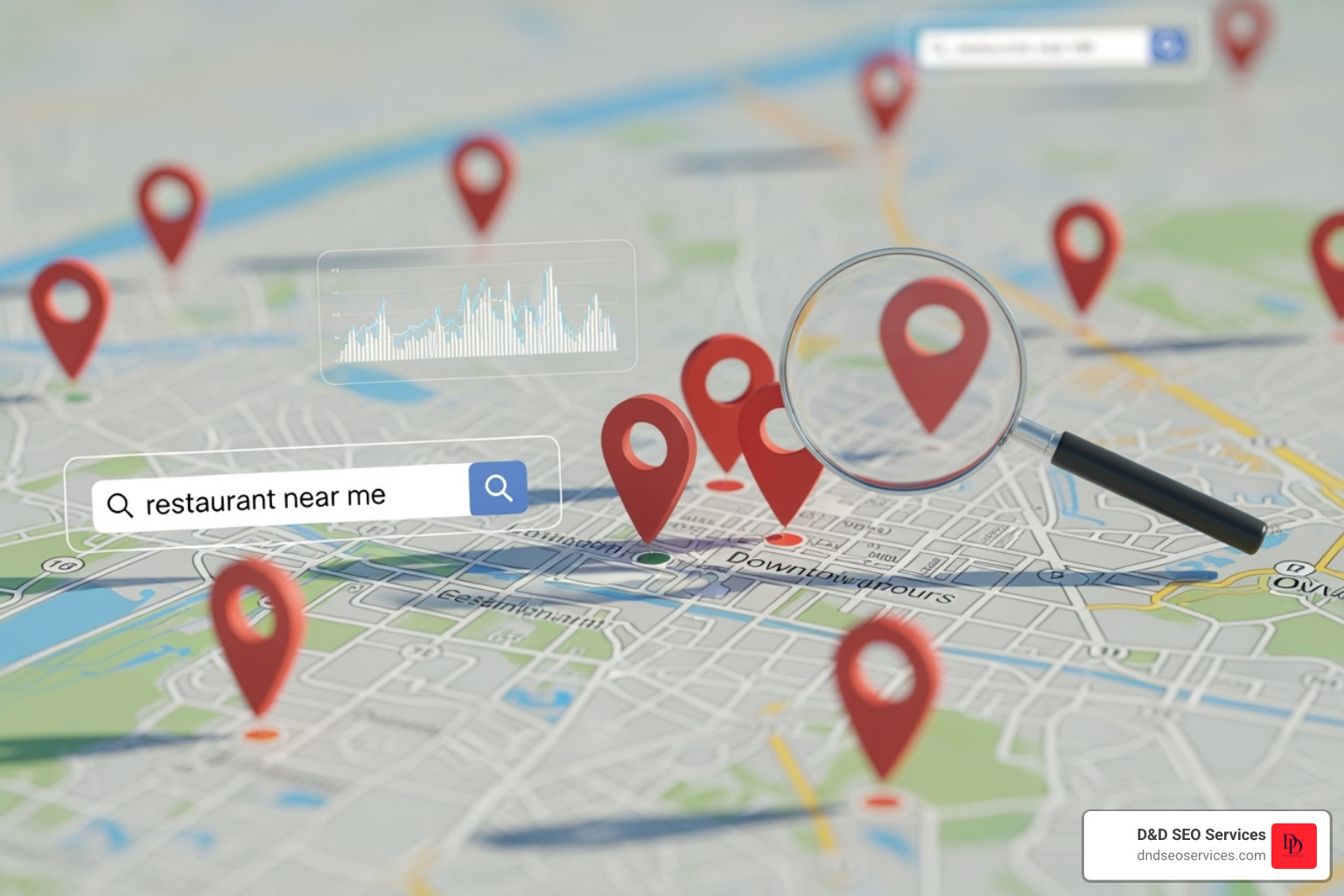
Keyword research is the foundation of local search visibility. By understanding what customers actually search for in your area and strategically using those terms on your website, you'll attract more qualified leads and drive real business results. The businesses that rank higher than you aren't necessarily better—they just know which words to use where.
Why Some Businesses Show Up and Others Don't
Every week, we work with business owners who ask the same question: "Why is my competitor ranking higher than me when we offer the same service?" The answer almost never comes down to who's better. It comes down to one thing: keywords.
When someone in Fort Myers searches for "emergency AC repair," Google uses keywords to decide which businesses to show. If your website doesn't include the exact words that person typed, Google can't match you with that customer. It's not personal—it's how search engines work.
By the end of this guide, you'll know exactly how to find the keywords your customers are searching for and use them strategically to get more visibility, more calls, and more business.
What Keyword Research Actually Means
Keyword research isn't complicated. Here's the simple definition:
Keyword research is figuring out the exact words your customers use when they're looking for what you sell.
Let's use a real example. Two people need a plumber in Cape Coral:
- Person A searches: "plumber near me"
- Person B searches: "emergency plumbing services cape coral"
Both are looking for a plumber. Both are local. But they're using different words. Google's job is to match each person with the most relevant business. If your website only shows up for "plumber near me" but not for "emergency plumbing," you're missing Person B entirely.
Why Local Keywords Matter
The numbers tell a compelling story about local search:
- 46% of all Google searches have local intent—people are actively looking for nearby businesses
- 88% of people who search for a local business visit or call that business within 24 hours
- Local searches convert faster than national ones because people are ready to take action
This means local keywords aren't just search terms—they're buying signals.
Common Local Keyword Patterns
Customers use predictable patterns when searching locally. Here are the most common:
| Pattern | Example | Why It Works |
|---|---|---|
| Service + City | "Dentist in Naples" / "HVAC repair Fort Myers" | Shows intent and location |
| "Near Me" | "Plumber near me" / "Pizza delivery near me" | Super-high intent, ready to buy |
| Qualifier + Service + City | "Best AC repair Cape Coral" / "Affordable dentist Naples" | Shows what matters to buyer |
| Emergency/Urgent + Service | "Emergency AC repair" / "24-hour plumbing" | Highest urgency, immediate action |
Understanding Keyword Intent
Not all keywords are created equal. Some keywords bring visitors who are just learning. Others bring people ready to buy right now. Understanding the difference—what we call "keyword intent"—helps you create content that actually converts.
To understand this better, it helps to know about the buyer's journey and how customers move through different stages of decision-making.
There are four main types of search intent:
| Intent Type | Example | Buyer Stage | Best Use |
|---|---|---|---|
| Informational | "How much does AC cost?" / "When to replace AC" | Research phase | Blog posts, guides |
| Commercial | "Best AC company" / "Top rated plumber" | Comparison/evaluation | Service pages, testimonials |
| Transactional | "Book AC repair now" / "Schedule appointment" | Ready to buy/act | Landing pages, booking forms |
| Navigational | "D&D SEO Services reviews" | Brand trust | Brand trust pages |
The key insight: Different keywords attract people at different buying stages. Your site should cover them all. Your homepage and service pages handle transactional keywords. Your blog handles informational and commercial keywords. Together, they create a complete ecosystem that captures customers at every point in their journey.
To go deeper into how customers behave at each stage, check out our guide on understanding user behavior.
How to Find the Right Local Keywords
You don't need expensive tools to find local keywords. Here are the most effective methods—some completely free:
1. Google Autocomplete & People Also Ask
Start here. It's free and it works.
- Go to Google and type your service + your city. Example: "plumber in cape coral." Watch the dropdown suggestions appear. These aren't random—they're based on real searches people are actually doing in your area. Write them down.
- Scroll to the bottom of the search results and look for the "People Also Ask" section. These are actual questions people are searching for. Each one is a keyword opportunity.
2. Google Business Profile Insights
If you have a Google Business Profile, you're sitting on valuable data. Go to your profile and click "Insights." Look for the "Queries" section. This shows you exactly which search terms brought customers to your profile. These are real searches from real customers in your area looking for what you sell.
Learn more about optimizing your Google Business Profile management.
3. Check Your Competitors
Your competitors have already done some of the research for you. Search your main service keyword (example: "dentist in naples") and look at the top 5 results. Pay attention to:
- The phrases in their page titles
- The keywords in their headings
- Repeated phrases throughout their site
This tells you which keywords are working in your market. For a comprehensive approach, use our complete competitor analysis guide.
4. Free Tools
- Google Keyword Planner - Shows search volume and competition (free with Google Ads account)
- AnswerThePublic - Visualizes all the questions people ask about your topic
- Ubersuggest - Shows keyword ideas and competition level
5. Ask Your Customers Directly
This is often overlooked but incredibly valuable. Call 5-10 recent customers and ask: "What did you search before you found us?" Their answers tell you exactly which keywords are bringing ready-to-buy customers. Document these—they're gold.
The Power of Long-Tail Keywords
Long-tail keywords are longer, more specific searches that usually have lower competition and higher conversion rates. They're often the best keywords for local businesses.
Long-Tail Examples
- "Affordable roof repair in cape coral" (not just "roof repair")
- "Same-day AC repair fort myers" (not just "AC repair")
- "Best dentist for kids in naples" (not just "dentist")
Why Long-Tails Matter
- Lower competition: Fewer businesses are targeting them
- Higher conversion: They match customer intent perfectly
- Voice search friendly: People speak in longer phrases
- AI Overview ready: Voice assistants and AI prefer specific, detailed keywords
For a deep dive into how to choose the best long-tail keywords, check out this comprehensive guide on long-tail keyword selection.
Case Study 1: The HVAC Company That Tripled Service Calls
An HVAC contractor in Fort Myers was getting decent traffic to his website but very few calls. He was targeting broad keywords like "AC repair" and "HVAC service." While these brought traffic, they weren't bringing the right customers.
We analyzed his customer calls and found a pattern: 60% of calls came from customers searching for "emergency AC repair fort myers" or "24-hour HVAC service." These were customers in crisis—broken AC in the summer heat—ready to pay premium rates for immediate service.
We restructured his content strategy around these long-tail keywords. We created:
- A dedicated page optimized for "emergency AC repair fort myers" with clear emergency response times
- Blog posts answering "What do I do if my AC breaks in summer?"
- Updated Google Business Profile posts with emergency service messaging
Result: Service calls increased 185% within 6 months. More importantly, 70% of these new customers were willing to pay emergency rates because they matched exactly what they searched for.
Where to Use Keywords on Your Site
Once you've identified your target keywords, where do you actually use them? Here's the roadmap:
Title Tag (Most Important)
This is the headline that shows up in Google search results. Include your primary keyword and city.
Example: "AC Repair in Fort Myers | 24-Hour Emergency Service"
Headings (H1, H2, H3)
Use your main keyword in the H1 (page heading). Use related long-tail keywords in H2 and H3 headings throughout the content. These help both Google and visitors understand your content structure.
Body Text
Use keywords naturally in your paragraphs. Don't force them or repeat them unnaturally. Modern Google is smart enough to understand variations and related terms. Write for humans first, keywords second.
Meta Description
The snippet that shows under your title in Google. Include your location and a benefit or value proposition.
Example: "Emergency AC repair in Fort Myers available 24/7. Same-day service. Free estimates. Licensed and insured."
Image Alt Text
Describe images with keywords naturally.
Example: "Technician performing air conditioning repair in Fort Myers home"
Google Business Profile Posts
Write posts that naturally include local keywords. Mention your city, service types, and any special offers. These appear in local search results.
For detailed guidance on optimizing all these elements, see our guide on on-page SEO for local businesses.
How to Prioritize & Avoid Keyword Cannibalization
Here's a critical mistake that many businesses make: They create multiple pages targeting the same keyword. When you do this, your own pages compete with each other, and Google gets confused about which page to rank.
This is called keyword cannibalization, and it significantly reduces your visibility and ranking power.
How to Avoid It
- Choose one primary keyword per page. Support it with 3-5 related long-tail variations, not competing keywords
- If two pages target the same term, merge them or differentiate them clearly
- Create separate pages only for different services or locations
- Internal link related pages with clear anchor text
To learn more about this common mistake, read our complete guide on duplicate content and keyword cannibalization.
Case Study 2: The Plumbing Company That Fixed Ranking Problems By Consolidating Content
A Cape Coral plumbing company had 5 different blog posts all competing for local plumbing keyword variations. They had posts on "emergency plumbing," "drain cleaning," "burst pipes," and "plumbing repairs"—all with overlapping keywords and similar content.
Google didn't know which page to show for local plumbing searches, so the company wasn't ranking well for any of them. Their visibility fluctuated wildly month to month.
We consolidated these 5 posts into one comprehensive guide: "Complete Plumbing Guide for Cape Coral Homeowners" that covered all service types—emergency services, drain cleaning, pipe repair, maintenance, and more. Each section used related keywords naturally without creating competition between sections.
We also created targeted service pages for each specific issue (emergency plumbing, drain cleaning, etc.) that linked back to the main guide with specific anchor text.
Result: Rankings stabilized and improved across all targeted keywords. They went from fluctuating between positions 5-20 to consistently ranking in positions 2-3 for local searches within 8 months. Website traffic from local search increased 240%.
How to Measure Results
Keyword optimization only matters if it drives actual business results. Here's how to measure what's working:
Google Search Console
Go to Google Search Console and navigate to Performance. This shows you which keywords are bringing impressions and clicks. Track these metrics monthly:
- Impressions: How many times your pages appeared in search results
- Clicks: How many people clicked through to your site
- Average Position: Where you rank on average for each keyword
Google Business Profile Insights
Check which search queries brought people to your profile, how many called, and how many visited. This tells you which keywords produce actual business results.
Call Tracking
If possible, use different phone numbers on different pages or implement call tracking software. This tells you which keywords are actually bringing customers who call.
Quarterly Adjustments
Review performance every three months. Add new long-tail keywords that are performing well. Remove or consolidate keywords that aren't bringing results.
Common Keyword Mistakes
Knowing what to do is half the battle. Here are mistakes to avoid:
Mistake 1: Using the Same Keyword Everywhere
Problem: Cannibalization. Your pages compete instead of work together.
Fix: One primary keyword per page. Support with 3-5 long-tail variations.
Mistake 2: Ignoring Location
Problem: Generic keywords don't bring local customers. "Plumber" gets more searches than "plumber in cape coral," but the latter brings customers ready to hire.
Fix: Always include city or neighborhood in keywords. Local is where the money is.
Mistake 3: Missing Long-Tail Keywords
Problem: Long-tail keywords might have lower volume, but they convert at 10x the rate of generic keywords.
Fix: Create content around specific, detailed searches. They're often easier to rank for AND they bring better customers.
Mistake 4: Not Updating Keywords Seasonally
Problem: Search behavior changes with seasons and trends. The keywords that worked in January might not work in June.
Fix: Review and adjust quarterly. Add seasonal keywords. This keeps your site relevant year-round.
Do You Need Help? Here's When to Hire a Professional
Keyword research isn't rocket science, but it is strategic. You can definitely start with the methods in this guide. But if you find yourself getting lost in the data or spending too much time on research without results, it might be time to bring in professionals.
Here are some signs you might need help:
- You have traffic but very few calls or conversions
- You're getting outranked by less qualified competitors
- You've been creating content but not seeing ranking improvements
- You want to accelerate growth but don't have the time for research
Frequently Asked Questions
What's the difference between local keywords and regular keywords?
Local keywords include location information (city, neighborhood, or "near me"). Regular keywords don't specify location. For local businesses, local keywords are 10x more valuable because they match customer intent perfectly—they're already looking for you in your area.
How many keywords should I focus on per page?
One primary keyword and 3-5 related long-tail variations. This keeps your message focused and avoids cannibalization. One page ranking well for multiple related keywords is much better than multiple pages competing for the same keyword.
Do "near me" keywords still work in 2025?
Absolutely. "Near me" searches have increased significantly. Mobile searches with "near me" intent bring some of the most qualified customers. Make sure your Google Business Profile is optimized for these searches.
Can I do keyword research myself, or should I hire someone?
You can absolutely start with the free methods in this guide. But if you're struggling to connect keywords to actual business results, or if you want to accelerate growth, professional guidance can save you months of trial and error. The ROI on keyword research is often huge—one well-optimized keyword can bring 10+ customers per month.
How often should I update my keywords?
Review your keyword performance quarterly. Add new keywords based on search trends. Remove keywords that consistently don't convert. Seasonal adjustments are important too—what works in summer might not work in winter for some industries.
Ready to Get More Calls From Local Searches?
Start with a free local keyword audit. We'll identify the high-value keywords your customers are searching for right now—and show you exactly why they're finding your competitors instead of you.
📞 Phone: (239) 276-8138
✉️ Email: dndseoservices@gmail.com
Let's find the keywords that turn searches into customers.
The Strategist Behind D&D SEO Services
I’m Danielle Birriel, founder of D&D SEO Services. For over 12 years, I’ve been helping local service businesses—from plumbers and HVAC companies to medspas, dentists, and in-home care providers—outrank competitors, attract more qualified leads, and turn online searches into paying customers.
I’m not here to sell you “SEO in a box.” I’m here to solve real problems local business owners face every day:
- You’re buried on Google while competitors dominate the top spots.
- Your phone isn’t ringing enough despite having great services.
- Your Google Business Profile isn’t optimized and isn’t bringing in leads.
- You’ve been burned by agencies promising results but delivering cookie-cutter strategies.
- You don’t know if your marketing is actually working because you’re not getting transparent reporting.
I built D&D SEO Services to change that.